

West Slopes Central
Backcountry Avalanche Forecast
Author: Irene Henninger
Issued: Saturday, February 28, 2026 at 6:58 PM PST
Expires: Sunday, March 1, 2026 at 6:00 PM PST
The Bottom Line
 The Bottom Line
Likelihood is low, but a deep, very large, and unsurvivable avalanche could happen naturally or with a human trigge on Sunday. Especially as temperatures warm, avoid traveling beneath large, smooth slopes. South-facing crusts will quickly soften and become moist, and if rollerballs or small loose avalanches begin occurring, shift travel to cooler, shadier slopes.
Avalanche Danger
Sunday, March 1, 2026
7500-5500ft3 - Considerable

5500-4500ft3 - Considerable
4500-2500ft2 - Moderate

Monday, March 2, 2026
7500-5500ft3 - Considerable
5500-4500ft3 - Considerable
4500-2500ft2 - Moderate
Avalanche Danger ScaleLearn moreGeneral InfoGeneral Information1 - LowLow2 - ModModerate3 - ConsConsiderable4 - HighHigh5 - ExtrExtreme
 1 - Low | 2 - Moderate | 3 - Considerable |  4 - High |  5 - Extreme | |
|---|---|---|---|---|---|
| Travel Advice | Generally safe avalanche conditions. Watch for unstable snow on isolated terrain features. | Heightened avalanche conditions on specific terrain features. Evaluate snow and terrain carefully; identify features of concern. | Dangerous avalanche conditions. Careful snowpack evaluation, cautious route-finding and conservative decision-making essential. | Very dangerous avalanche conditions. Travel in avalanche terrain not recommended. | Extraordinarily dangerous avalanche conditions. Avoid all avalanche terrain. |
| Likelihood of Avalanches | Natural and human-triggered avalanches unlikely. | Natural avalanches unlikely; human-triggered avalanches possible. | Natural avalanches possible; human-triggered avalanches likely. | Natural avalanches likely; human-triggered avalanches very likely. | Natural and human-triggered avalanches certain. |
| Avalanche Size and Distribution | Small avalanches in isolated areas or extreme terrain. | Small avalanches in specific areas; or large avalanches in isolated areas. | Small avalanches in many areas; or large avalanches in specific areas; or very large avalanches in isolated areas. | Large avalanches in many areas; or very large avalanches in specific areas. | Very large avalanches in many areas. |
Avalanche Problems (2)
Problem #1: Persistent Slab
Problem Type
Persistent Slab
Aspect/Elevation
Likelihood
Size
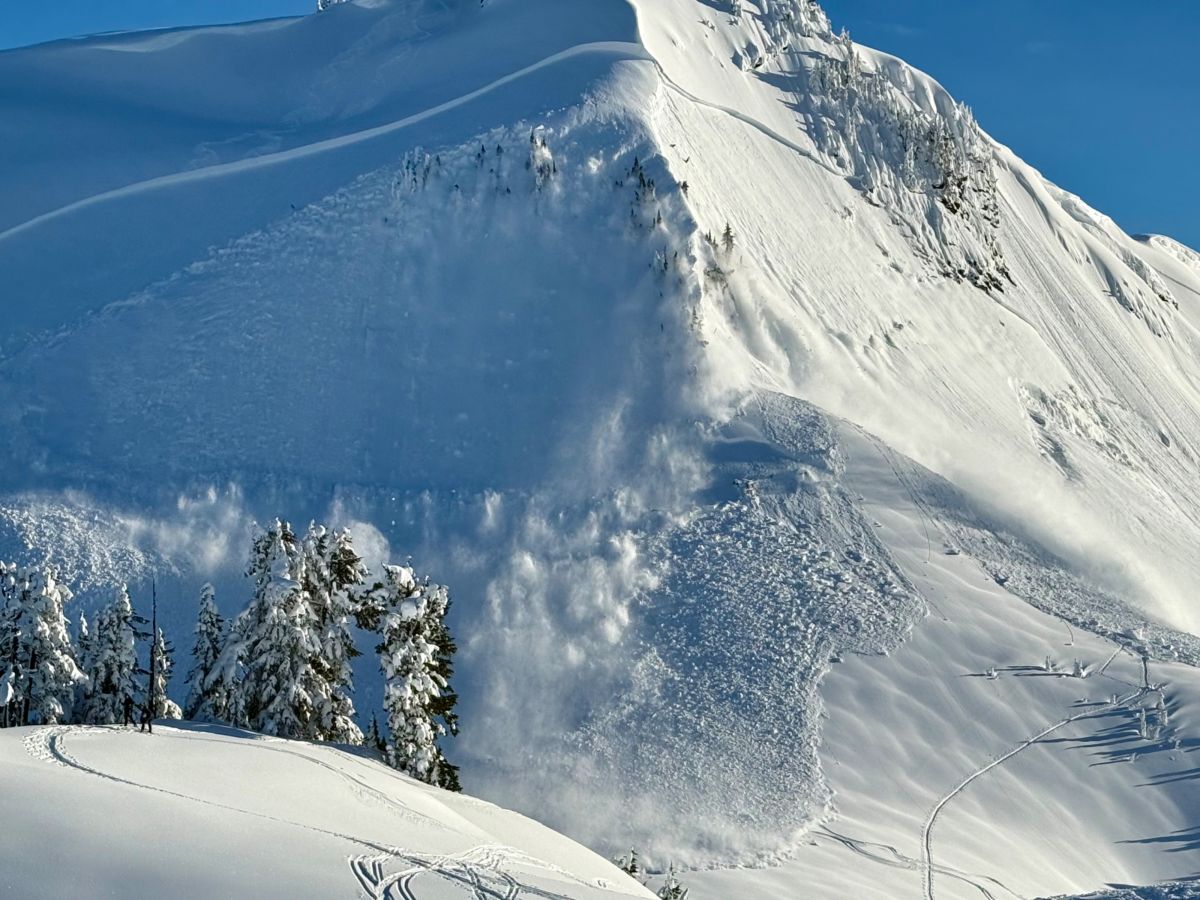
(2/28/2026) A very large natural avalanche that occurred Saturday afternoon in the neighboring West North zone. Given what's been happening in all the nearby zones, one of these could also happen in the West Central zone. Photo: Zack McGill - Cascade Mtn Ascents
A very large natural avalanche occurred unexpectedly the neighboring West North zone on Saturday. All the other zones around the West Central zone have experienced unexpected small and large avalanches, most likely from persistent layers. There may only be one or two in the zone, but we really aren't sure, and it's too scary to ignore. These may increase in likelihood as temperatures increase into Sunday, and wetting occurs on slopes facing the sun, impacting shallower buried weaknesses that may continue to propagate into thicker areas.
Identify overhead hazards where you travel. Although the likelihood is low, you may want to consider steering clear of large, steep slopes and areas beneath them at upper and mid elevations, especially as the day warms. We don't expect large or very large avalanches at lower elevations, but larger avalanches may run down to these areas.
Problem #2: Wet Loose
Problem Type
Wet Loose
Aspect/Elevation
Likelihood
Size
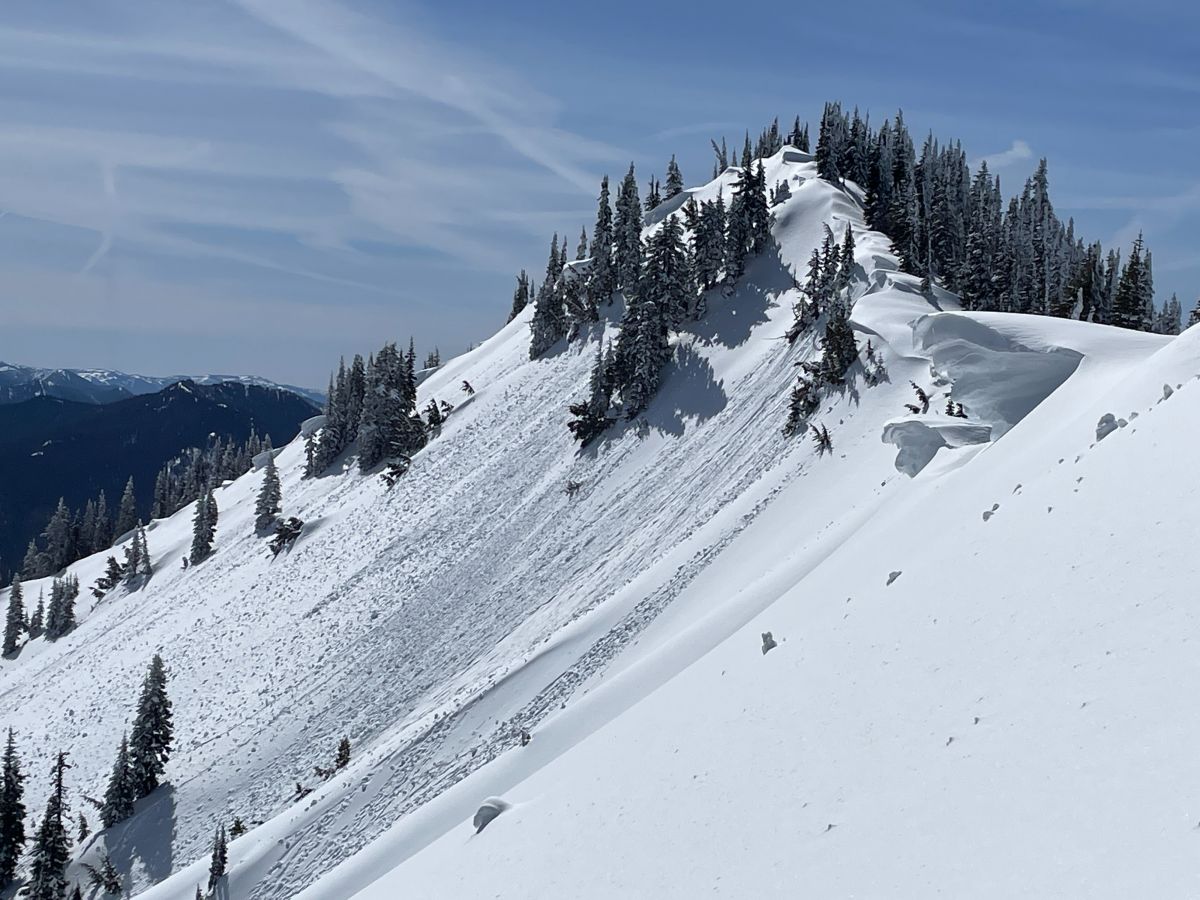
Example photo: Natural rollerballs and small wet loose avalanches. These likely occurred as blobs of snow fell off the rocks and trees above. Expect to see this on Sunday.
Wet loose avalanches will be possible when crusts from Saturday break down and snow gets wet. Avalanche size will vary with how much recent snow has accumulated—expect larger, more consequential slides in areas that picked up the most new snow. Size also depends on terrain, as steep, sustained fall-line slopes can produce more powerful avalanches. But even a small wet loose avalanche can pose a serious risk if it carries you over a cliff, into a creek, or through rocks or trees. Keep track of sunny slopes overhead as the day warms.
Forecast Discussion
On Thursday, February 26th, a skier was fully buried in an avalanche at Stevens Pass Resort. Despite a long burial time, the skier was successfully rescued by Stevens Pass Patrol and treated for non-life-threatening injuries. The avalanche occurred on a wind-loaded northwest aspect near 5,3000ft and likely ran on a persistent weak layer over a crust, 15-20" deep.
Many slope testers were out on Saturday. In the neighboring West North zone, very few human-triggered avalanches were reported considering all the slope testing. Earlier this week, natural, explosive, and human-triggered avalanches in nearby areas likely failed on persistent grains, showing the structure is still capable of producing slab avalanches in isolated terrain features. There's enough uncertainty and information from neighboring zones that we've added the problem into this zone as well.
In West North, recent snowfall exceeded the forecast, with observers reporting fresh slabs, and recent natural avalanches within the newest snow layer as the storm tapered Friday. Avalanche activity slowed, but concerns for smaller slabs that you could still trigger, especially in wind-loaded areas exist. Now we have the added uncertainty of persistent slabs that could wake up with the additional load and subsequent warming.
Cornices could start failing, triggering slab avalanches on underlying slopes with the warm temperatures we're seeing on Sunday as well.
This information is provided by the U.S.D.A. Forest Service and describes general backcountry avalanche hazard and conditions.
It does not apply to ski areas and highways where avalanche mitigation is conducted.